
Why Workplace Wellness
Matters More Than Ever
The conversation around workplace wellness has evolved.
Organizations are facing increasing challenges related to employee stress, burnout, retention, engagement, and productivity. Employees are being asked to navigate constant change while maintaining high levels of performance in increasingly demanding environments.
At the same time, leaders are recognizing that employee well-being isn’t simply a benefit. It’s a business strategy.
Research from Gallup has found that employees who are thriving in their overall well-being are significantly less likely to experience burnout and are more likely to be engaged at work. Organizations that support employee well-being often see benefits that extend beyond morale, including improved retention, stronger performance, and healthier workplace cultures.
The conversation has shifted from whether employee well-being matters to how organizations can support it in a strategic and effective way.
What Is Workplace Wellness?
Workplace wellness is often associated with wellness challenges, fitness programs, health screenings, or employee perks.
While these offerings can be valuable, true workplace wellness goes much deeper. A healthy workplace supports the factors that influence how people perform, recover, communicate, and contribute each day.

This includes:
- Physical well-being
- Mental and emotional well-being
- Stress resilience
- Workplace culture
- Leadership support
- Workload management
- Employee engagement
- Opportunities for recovery and growth
Effective workplace wellness focuses on creating an environment where employees can perform well while maintaining their health and well-being.
My Journey Into Workplace Wellness Consulting
Over the years, I noticed a recurring pattern.
Many of the challenges clients brought into coaching sessions are influenced by workplace stress, workload demands, leadership dynamics, and organizational culture.

I worked with professionals who were exhausted, struggling to maintain healthy routines, experiencing increased stress, and finding it difficult to recover from the demands of work and life.
Again and again, I saw how workplace environments directly influenced individual well-being. That realization led me to expand my work beyond supporting individuals and into helping organizations create healthier, more sustainable workplaces.
Today, I combine my background in nutrition, health coaching, behavior change, and yoga with workplace wellness strategy to help organizations support both employee well-being and organizational performance.
What Does a Corporate Wellness Consultant Do?
A corporate wellness consultant helps organizations identify opportunities to improve employee well-being, engagement, and workplace performance.
This may include:
- Workplace wellness assessments
- Employee well-being strategy
- Leadership support
- Workplace wellness workshops
- Employee coaching
- Stress resilience programs
- Corporate yoga and mindfulness programs
My role is to help organizations move beyond isolated wellness initiatives and create a more intentional, sustainable approach to supporting their workforce.
Every organization is different, which means effective workplace wellness strategies should be tailored to the unique needs of each team.
Whether through workplace wellness assessments, coaching, workshops, or yoga and movement-based programs, the goal is to create workplace environments that support both employee well-being and organizational performance.
Why Workplace Wellness Strategy Matters
One of the biggest challenges organizations face is knowing where to begin.
Leaders often recognize that stress, burnout, or disengagement may be affecting their workforce, but they aren’t always sure which factors are contributing most or where investments will have the greatest impact.
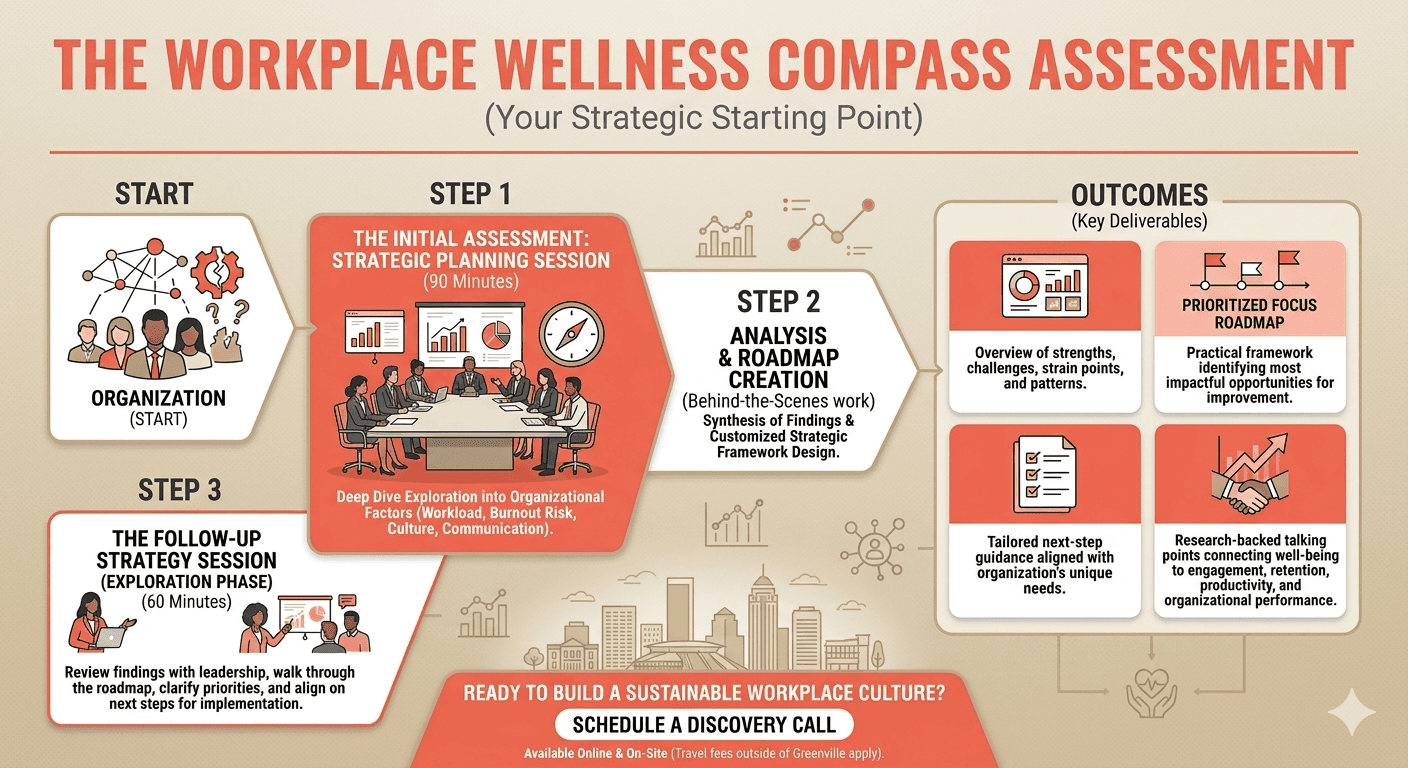
That’s why I developed the Workplace Wellness Compass Assessment.
The Workplace Wellness Compass Assessment provides leadership teams with a structured process for identifying priorities and making informed wellness decisions.
Together, we explore:
- Workload patterns and pressure points
- Burnout risk and recovery capacity
- Communication flow and team dynamics
- Leadership and culture influences
- Employee energy, focus, and engagement trends
The goal is to understand what is working, where strain is occurring, and where leadership should focus first.
Building a Workplace Where People Thrive

When organizations understand their priorities and align wellness initiatives with business goals, they create a stronger foundation for both employee well-being and long-term performance.
Workplace wellness is about creating the conditions that help people perform at their best while supporting their health, resilience, and overall quality of life.
Ready to Strengthen Workplace Well-Being?
If you’re exploring ways to improve employee well-being, engagement, and workplace performance,
the Workplace Wellness Compass Assessment can provide a clear starting point.
Together, we’ll identify strengths, uncover opportunities for improvement, and create a clear roadmap that supports employee well-being, engagement, and organizational performance.