
The Difference Between
Workplace Perks
and Workplace Well-Being
Random Acts of Wellness Are Not a Workplace Wellness Strategy.
I was recently catching up with a friend who told me about her company’s latest employee wellness initiatives.
The leadership team had organized a trip to Top Golf and planned several office pizza parties throughout the quarter.
On the surface, it sounded great. The events were fun, social, and genuinely well-intentioned.
But as our conversation continued, a different story emerged.
Behind the scenes, employees were quietly confiding in her that they felt completely exhausted.
Many were disengaged, overwhelmed, and struggling to keep up with growing demands. Several felt uncomfortable speaking openly with their managers about their workload, stress levels, or burnout concerns.
While leadership was investing in employee appreciation activities, many employees were simply trying to make it through the workweek.
Unfortunately, this disconnect is more common than many organizations realize.
The Difference Between a Wellness Perk and a Strategy
There is absolutely nothing wrong with team outings, appreciation events, or celebrating employees.
The problem occurs when organizations mistake those activities for a workplace wellness strategy.
- A pizza party can boost morale for an afternoon.
- A team-building event can strengthen relationships.
- A wellness challenge can create short-term excitement.
But none of those initiatives address the deeper factors that often drive employee stress, disengagement, absenteeism, or turnover.

When employees are struggling with chronic stress, unrealistic workloads, poor communication, lack of recovery, or unclear expectations, workplace perks become temporary distractions rather than meaningful solutions.
Employees do not necessarily need more perks. They need workplaces that support their ability to perform well without sacrificing their health and well-being.
Why Employees Become Disengaged
In my work as a Master Nutrition Therapist, Health Coach, and Workplace Wellness Consultant, I’ve noticed a recurring pattern.
Many of the challenges people bring into coaching sessions aren’t solely personal health issues.
They’re often connected to what happens during the workday.
- Long hours.
- Constant interruptions.
- High workloads.
- Limited recovery time.
- Leadership strain.
- Communication breakdowns.
- The inability to disconnect after work.
Over time, these pressures affect energy, sleep, mental well-being, motivation, and overall performance.
When employees no longer feel supported, heard, or capable of sustaining the pace, disengagement often follows.
Looking Beyond Surface-Level Solutions
Organizations that want to improve employee well-being, retention, and performance must move beyond what I often call “random acts of wellness.”
Instead of asking: “What wellness activity should we offer next?”
Leaders may benefit more from asking: “What’s contributing to stress and energy depletion within our organization?”
The answer is often found by examining:
- Workload and Capacity: Do employees have the resources, support, and time needed to do their jobs effectively?
- Recovery and Resilience: Are employees able to recharge, or are they operating in a constant state of pressure?
- Communication and Trust: Do team members feel safe raising concerns before they become larger problems?
- Leadership and Culture: Are leaders equipped to support employee well-being while managing performance expectations?
- Health and Lifestyle Factors: How are stress, sleep, nutrition, and movement influencing employee energy and productivity?
These questions create a much clearer picture than employee satisfaction surveys alone.
Stop Guessing What Your Workforce Needs
Before investing in another wellness initiative, consider whether you’re addressing the symptoms or the root causes.
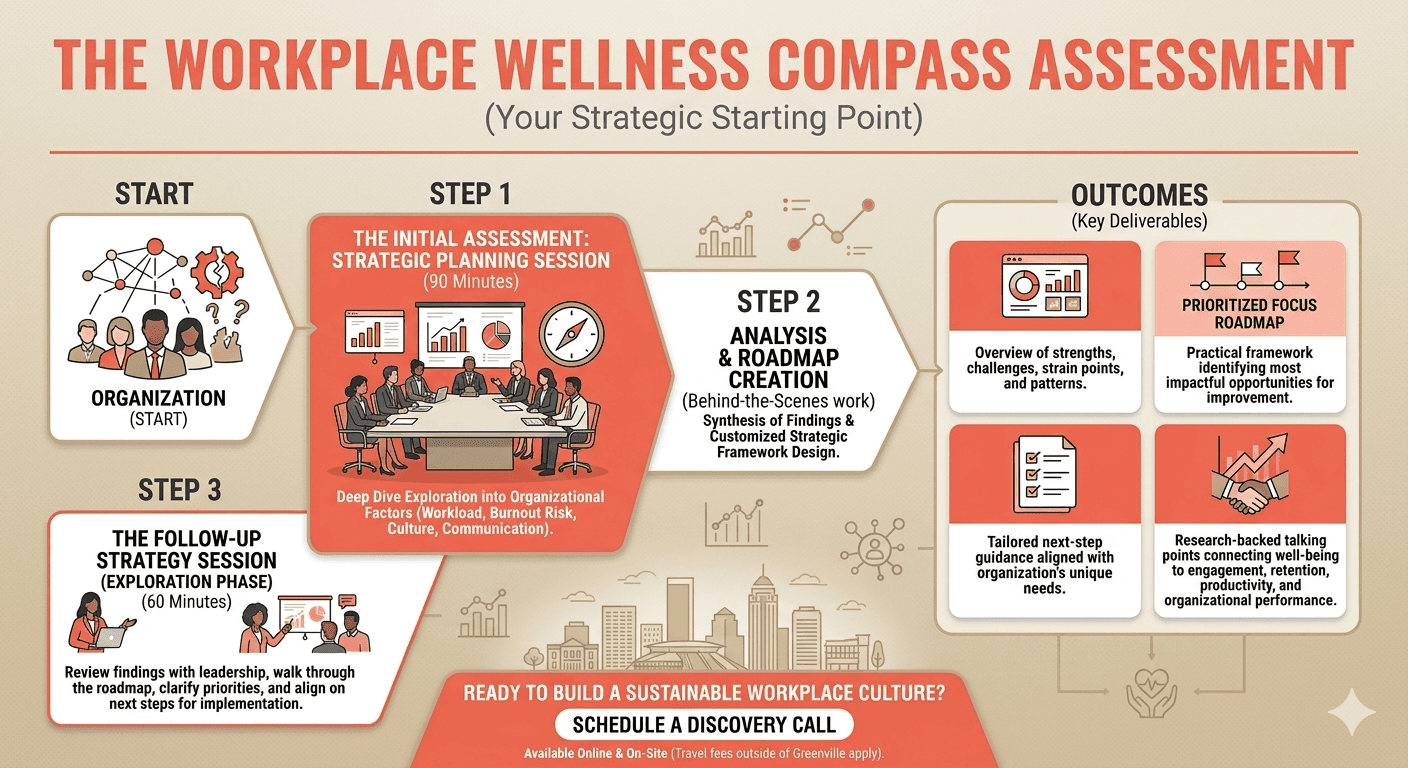
The Workplace Wellness Compass Assessment helps organizations identify hidden stressors, uncover opportunities for improvement, and create a strategic roadmap for employee well-being.
Because lasting workplace wellness requires more than perks. It requires clarity, intention, and a plan.
The Workplace Wellness Compass Assessment provides leadership teams with a structured process for identifying priorities and making informed wellness decisions.
Looking for a more strategic approach to employee well-being?
Learn more about the Workplace Wellness Compass Assessment and schedule a discovery call.